

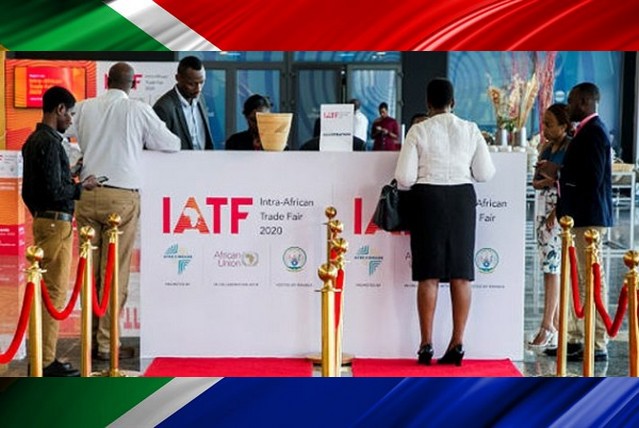
Togo is one of the countries that will take part in the second edition of the Intra-African Trade Fair. The event to be held from November 15-21, 2021 in Durban, South Africa will bring together actors from diverse backgrounds and provide the opportunity to showcase and exhibit goods and services. As part of this second edition of the Intra-African Trade Fair (IATF2021), Togo will initially try to promote more local products. The Ministry of Commerce has launched an evaluation and selection process in this direction until August 16. It will also be a matter of the country praising Destination Togo. Previously announced in Kigali (Rwanda), the second edition of the Intra-African Trade Fair was relocated to Durban, South Africa, in the province of KwaZulu-Natal from November 15 to 21, 2021. A decision taken by the Advisory Board chaired by Olusegun Obasanjo, former President of the Federal Republic of Nigeria. “The relocation of the Intra-African Trade Fair to Durban allows us to save time on the schedule and will allow African countries and businesses, as part of their recovery strategy, to take full advantage of the trade fair, which is also an important element in the implementation of the African Continental Free Trade Area within the framework of which trade began this year, ”the president of the advisory council argued last July. Recall that the second edition of this event was initially scheduled to be held from September 6 to 12, 2021, before a date change last March due to the evolution of the pandemic. Source: Ocean News
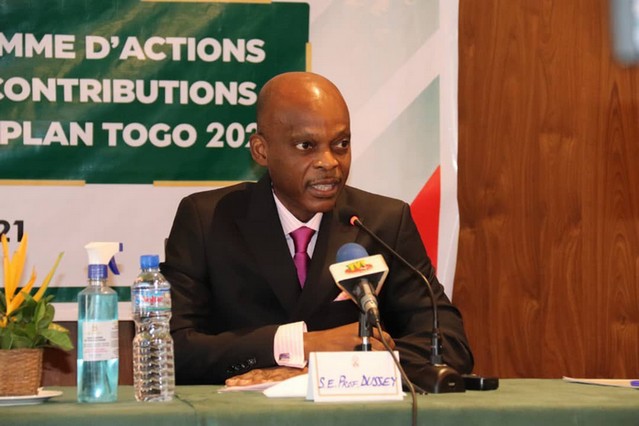
Launch of the Diaspora Window and the Action Program to strengthen the contributions of the Togolese Diaspora to the Togo 2025 Plan
The government wants to involve Togolese Abroad more in the development process of their country. It is in this sense that the Minister of Foreign Affairs, Regional Integration and Togolese abroad, Robert Dussey on Monday launched in Lomé the “Diaspora Window and the action program for strengthening the contributions of the Togolese diaspora in the Togo 2025 Plan ”. Through this initiative, the government intends to provide Togolese Abroad a flexible and inclusive platform capable of responding to their demands and expectations and supporting the implementation of the action program to strengthen the contributions of the diaspora in Plan Togo 2025. The “Diaspora window and action program for strengthening the contributions of the Togolese diaspora to the Togo 2025 Plan” follows several institutional and strategic initiatives of the government in favor of the Togolese diaspora since 2005. This is the creation of of the Directorate of Togolese Abroad (DTE) by decree in 2005, the creation the same year of the High Commission for Returnees and Humanitarian Action (HCRAH), the development and implementation of the Diaspora program in particular on the use of the skills of the diaspora (2010-2014), the creation in 2014 of the interministerial committee responsible for the coordination and monitoring of migration and development activities, the establishment of a diaspora unit responsible for supporting Togolese from the outside carrying projects in their implementation. We also note the designation since 2015 of focal points in charge of the diaspora in the diplomatic and consular missions of Togo, meeting tours with the diaspora in 2013 and 2014, the organization of major diaspora meetings in 2014 in Lomé, the ‘visa exemption for Togolese living abroad with dual nationality, the organization of editions of the “Diaspora Success” week in 2016 and 2019, the launch of the Government’s roadmap for Togolese in the outside, the election of the 77 Country Delegates followed by the official installation of the High Council of Togolese Abroad (HCTE) and the adoption of the law on the vote of the diaspora in 2019. It is a technical support body of the HCTE which develops measures and strategies to encourage and encourage Togolese living abroad to carry out projects in Togo, to attract investments to our country and thus participate in the economic, social and cultural development of Togo and promote its influence in the world. It is responsible for encouraging the savings of Togolese Abroad for investment purposes in Togo, promoting the emergence of groups of investors within the Togolese community abroad, mobilizing investors and others. international partners. Launching, the Minister in charge of Togolese Abroad recalled the importance of the more adequate involvement of Togolese Abroad in the development process in accordance with the vision of the Government’s Roadmap in favor of the Togolese diaspora presented on April 1, 2019. Robert Dussey also invited members of the Togolese diaspora to appropriate the Diaspora Window and make it a real collective tool for promoting their projects and investments in Togo. Prof Dussey then noted that the evolution of financial transfers represent nearly 8% of GDP and estimated at US $ 451 million in 2018, US $ 458 million in 2019 and US $ 441 million in 2020. In addition, he mentioned the impact of the Covid-19 pandemic on the implementation of projects planned by the government in favor of the diaspora. “In order to meet the challenge of mobilizing the resources and assets of Togolese Abroad despite this global health crisis affecting African diasporas, the speakers, after a reminder of the multiple initiatives in favor of the Togolese diaspora presented the Diaspora Window and the action program to strengthen the contributions of Togolese Abroad to the Togo 2025 Plan as well as the various contribution approaches of the Togolese diaspora to the development of the municipalities of Togo ”, declared Prof Dussey. Several initiatives are announced for the future. For the year 2021, two flagship projects of the action plan, including the census of Togolese Abroad and the directory of entrepreneurs and investors from the diaspora will be implemented. For the years 2022 and 2023, the action program aims to implement various projects including the platform for the placement of Togolese Abroad in national and international public structures and in multinationals, tools for monitoring contributions and facilitation of projects and investments of the diaspora in Togo, (the Observatory of the Togolese Diaspora, the Guide of facilitating projects of Togolese Abroad in the service of development, the Guide of support and access mechanisms funding). We learn that an Incubator dedicated to the Togolese diaspora, a support platform for partnerships led by the Togolese diaspora within the framework of decentralized cooperation with the Togolese municipalities and other international programs as well as the preparation of the creation of the Fund Investment of Togolese Abroad (FITEX) will also be translated into facts.
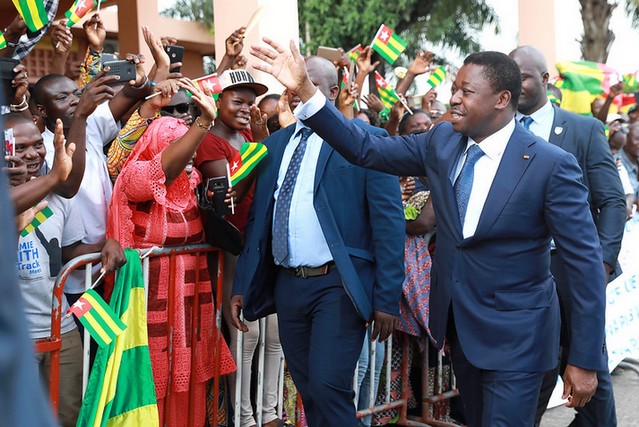
Development : the government in an inclusive approach with Togolese abroad
In view of the importance of the contribution of the diaspora to the economic and social development of our country, the government has put in place mechanisms and institutions in favor of Togolese abroad. This will of the government is manifested by the establishment of a formal framework for the benefit of the diaspora. First the High Council of Togolese Abroad (HCTE) which is a permanent structure of exchanges and initiatives aimed at creating a synergy of action between Togolese abroad, the government and fellow citizens living in country. The country now has a technical support body for the HCTE, called Guichet Diaspora. This mechanism defines strategies and measures to encourage Togolese living abroad to become more involved in development processes through socio-economic and cultural projects. To this end, the government has included in its agenda for the current year the census of Togolese abroad and the development of the directory of entrepreneurs and investors from the diaspora. Actions are also planned for the years 2022 and 2023. These include, among others, the Action Program aimed at implementing initiatives such as the positioning of Togolese abroad in public and international structures. The government will put in place tools to monitor and facilitate diaspora projects and investments. To this must be added the installation of an incubator dedicated to the Togolese diaspora and a support platform for partners within the framework of decentralized cooperation as well as the creation of an Investment Fund for Togolese of the Exterior (FITEX). These actions complement many others already undertaken by the Togolese government, in particular the “Diaspora Program” using the skills of Togolese Abroad and the Interministerial Committee in charge of coordinating and monitoring migration activities, the Week “Diaspora Success Stories”, the right to vote, visa exemption for Togolese living abroad with dual nationality and tax measures to facilitate business creation. These various measures have made Togo a model in terms of dialogue and involvement of the diaspora in Africa. In February 2021, Togo made its voice heard on this basis in the African policy of involving Africans around the world in the process of integral and sustainable development of the continent. A month ago, Togo concluded a partnership agreement with France for the implementation of the “Talents en Commun” program. It was during an official visit of the President of the Republic to Paris. This convention aims to mobilize the skills of the diaspora for the benefit of African countries, particularly in the digital economy sector. All of these inclusive approaches aim to involve Togolese Abroad in a dynamic development of the country which needs all its daughters and all its sons, both inside and outside.

Structuring the agricultural world
One million farmers will have access to the financing offered by the Incentive Mechanism for Agricultural Financing Based on Risk Sharing (MIFA) by 2025. Aid will be granted in priority to cooperatives. As long as they reorganize themselves from top to bottom. The idea that independent producers come together in cooperatives to be more efficient. Italy will provide assistance and advice through Credit Coopératif. “The objective of this project is to increase the integration of agricultural value chains to increase the productivity of cooperative societies,” said Aristide Agbossoumondè, the director general of MIFA. Based on risk sharing, the MIFA aims to professionalize the agricultural sector by structuring value chains, increasing the volume of financing allocated by financial institutions to the sector and developing innovative insurance and technological products. The MIFA is supposed to facilitate sustainable access to suitable financial services for smallholders and micro, small and medium-sized agricultural enterprises, so that they can develop their activities and access markets.

Togo has a new government
The new government team of the Prime Minister, Head of Government Victoire Tomégah-Dogbé is known. The list was made public this Thursday, October 1, 2020 through a decree of the President of the Republic Faure Essozimna Gnassingbé. The new government of the Togolese Republic has thirty-three members. Fourteen (14) new ministers are joining the Government, which thus has eleven (11) women including one woman in the Ministry of the Armed Forces. Three (3) ministers change positions, and three (3) ministries are attached to the Presidency of the Republic. The average age of the new government is around 40 years old. Here is the new Togolese executive Minister of Social Action, Promotion of Women and Literacy: Ms. Adjovi Lonlongno Apedo, wife Anakoma Minister of Territorial Administration, Decentralization and Territorial Development: Mr. Payadowa Boukpessi, Minister of State Minister of Foreign Affairs, Regional Integration and Togolese Abroad: Prof. Robert Dussey Minister of Agriculture, Livestock and Rural Development: Mr.Antoine Lekpa Gbegbeni Minister of the Armed Forces: Ms. Essozimna Marguerite Gnakadè Minister of Trade, Industry and Local Consumption: Mr. Kodjo Adédzé Minister of Communication, Media, Government Spokesman: Prof. Akodah Ayéwouadan Minister of Culture and Tourism: Mr. Kossi Lamadokou Minister of Accessibility and Rural Roads: Mr. Bouraïma Kanfitine Tchédé-Issa Minister of Grassroots Development, Youth and Youth Employment: Ms. Myriam de Souza-D’Almeida Minister of Human Rights, Citizenship Training, Relations with Institutions of the Republic, Government Spokesman: Mr. Christian Trimua Minister of water and village hydraulics: Mr. Bolidja Tiem Minister of Economy and Finance: Mr. Sani Yaya Minister of Maritime Economy, Fisheries and Coastal Protection: Mr. Edem Kokou Tengué Minister of Digital Economy and Digital Transformation: Ms.Cina Lawson Minister of Primary, Secondary, Technical and Craft Education: Prof. Komla Dodzi Kokoroko Minister of Higher Education and Research: Prof. Majesté Ihou-Watéba Minister of Environment and Forest Resources: Mr. Katari Foli-Bazi Minister of Public Service, Labor and Social Dialogue: Mr. Gilbert Bawara Keeper of the Seals, Minister of Justice and Legislation: Mr. Pius Agbétomey Minister of Health, Public Hygiene and Universal Access to Health Care: Prof. Moustafa Mijiyawa Minister of Security and Civil Protection: General Damehame Yark Minister of Sports and Recreation: Doctor-Commander Kama Lidi Kedjaka Bessi Minister of Road, Rail and Air Transport: Mr. Affoh Atcha-Dédji Minister of Public Works: Ms. Zouréhatou Tcha-Kondo, spse. Kassah-Traoré Minister of Town Planning, Housing and Land Reform: Mr. Koffi Tsolenyanou Minister Delegate to the Minister of Territorial Administration, Decentralization and Territorial Development, in charge of territorial development: Mr. Essomanam Edjéba Minister Delegate to the Minister of Primary, Secondary, Technical and Crafts Education, in charge of Technical and Crafts Education: Mr. Eke Odin Minister Delegate to the Minister of Health, Public Hygiene and Universal Access to Care, responsible for universal access to care: Ms. Mamessilé Akla Agba Assih Minister Secretary General of the Government: Mr. Kanka-Malik Natchaba Under the Presidency of the Republic Minister, Secretary General of the Presidency: Ms. Sandra Ablamba Johnson Minister responsible for financial inclusion and the organization of the informal sector: Ms. Mazamesso Assih Minister Delegate to the President of the Republic in charge of Energy and Mines: Ms. Mawougno Aziablé The Ministry of Planning and Cooperation is attached to the Presidency of the Republic
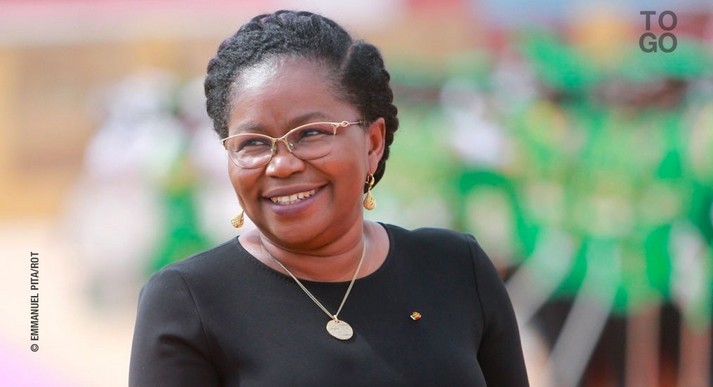
A woman as prime minister
The President of the Republic, H.E. Mr. FAURE ESSOZIMNA GNASSINGBE appointed, by decree on September 28, 2020, Mrs. Victoire Tomégah-Dogbé, as Prime Minister. Thus, Togo has, for the first time in its history, a woman at the head of the Prime Minister. Previously Chief of Staff to the President of the Republic, Minister responsible for grassroots development, crafts and youth, and former UNDP senior official, the new Head of Government thus succeeds Mr. Komi Selom Klassou.

Togo is not going to do things by halves
Côte d’Ivoire has decided to reopen from July 1 international flights suspended for almost four months to curb the spread of covid-19. All passengers arriving on international flights will be subject to health checks and systematic follow-up during their stay in Côte d’Ivoire. Togo should soon open its air borders. The arrival will however be under very strict health conditions. No details have filtered for the moment concerning the device. Authorities could ask passengers on intercontinental flights to do 72- or 96-hour PCR tests before flying. Upon arrival, they will first pass through a laboratory located in the old terminal. Temperature measurement, information on the place of residence, telephone numbers to ensure traceability and random checks. Nor is it impossible that visitors are required to perform a second PCR test a few days after their arrival. All this sanitary mechanics will be clarified in the coming days. To revive the economy and allow free movement, Togo, like its neighbors, has the obligation to reopen airports. With maximum caution.

Bringing the partnership with the EU into line with the reality of the world
Robert Dussey, chief negotiator for the Organization of ACP States (OEACP), urges all countries to adopt innovative measures *. ______ The coronavirus, which has been shutting down the world for several weeks, challenges us humans and confronts us with certain existential questions. Where are we going so fast? Is humanity going to its loss or is it following its own destination? These questions, which cannot leave the human conscience indifferent, convince us of one thing: the human experience of freedom in history, the theater of contrasts, can lead to better or worse. When the worst happens, it experiences, but also constitutes an invitation by humanity to a reorientation of its existential behavior. Generations pass, but humanity remains and has a duty of lucidity towards itself as the coronavirus has just reminded us once again. This pandemic has got the better of national and continental borders, and the tricontinental ACP (Asia, Caribbean, Pacific) space is not immune to its sphere of extension. The area is less affected by Covid-19, both in number of contamination and in mortality, which currently contradicts all the apocalyptic predictions. However, the impacts of the pandemic on the three regions of the Organization of African, Caribbean and Pacific States (OEACP) are very real. They must lead the organization to invent an internal strategy to respond to pandemics and to put the human and social at the base of relations with its partners. Indeed, the countries of the OEACP, beyond national and regional specificities, have a common characteristic trait: vulnerability. It is a plural vulnerability because it is multisectoral. The coronavirus crisis is straining very fragile health systems, under pressure from national solidarity mechanisms and very vulnerable economies. Several countries in the organization are already experiencing the economic impacts of the crisis. The consequences are humanly costly, socially paralyzing and economically dangerous. The economic growth which has enabled certain ACP countries to rise to the rank of middle-income countries is today highly questioned. The economic crisis that the Covid-19 imposes on countries risks eventually tipping an even larger proportion of populations into “objective poverty” and amplifying the level of vulnerabilities in the three regions. The common condition of vulnerability of the ACP countries, an expressive sign of a fundamental ontological fragility which they share with the whole human community, predisposes them, at operational and economic levels, to the response to the pandemic. However, coordinated collective action at the ACP level and an internal response strategy could support the fight at the scale of the three regions. Following the new spirit of the recently revised Georgetown Agreement, and in response to current challenges, both health, social and economic, the organization must step up cooperation internally. The coronavirus crisis invites the ACP to explore their possibilities for internal cooperation from which innovative actions can emerge. “In the beginning was action” (Goethe) and we must act and above all quickly, the present being the moment of choice and action (Simone de Beauvoir). Fortunately, intra-ACP cooperation is at work. Witness the initiatives and measures taken by the organization in collaboration with the African Farmers Organization (PAFO) against the socio-economic impacts of the pandemic on agricultural production and food supply systems. It must be amplified on a transcontinental ACP scale and lead to a common strategy and a solid ACP plan of response to the coronavirus. The strategy must be motivated by a common commitment against the same challenge in a sense of common belonging and community of destiny and have a substantial economic component intended to support the economic recovery of the Member States. The Extraordinary Summit of Heads of State and Government was held on June 3 on the theme “Transcending the Covid-19 Pandemic: Building Resilience Through Global Solidarity”. The meeting met this requirement and enabled the organization to internally harmonize pandemic response strategies and actions. External partners are supporting the OEACP in the response to the coronavirus. The European Union, through the Europe-Africa-Caribbean-Pacific Liaison Committee and especially the Team Europ initiative, has allocated 20 billion euros. It was presented on April 8 at the launch of the European response, at the international level, to the coronavirus pandemic within the framework of cooperation. The extraordinary summit on June 3 was also an opportunity for the OEACP to call for more global solidarity towards its members during this time of crisis. In times of crisis, solidarity saves. The organization of the ACP States and the EU are in talks with a view to redefining the normative and regulatory framework for their partnership in its post-Cotonou phase. As nature does nothing in vain (Emmanuel Kant) and historical coincidence obliges, the partners must clearly include clauses relating to pandemics and their socio-economic consequences. Human, social and health must be at the heart of post-Cotonou. “The distribution of the benefits of global relations depends not only on internal policies, but also on a whole range of international agreements of a social nature,” recalled Amartya Sen in 2012. Who spoke of “trade treaties, patent law, global health initiatives, international education arrangements, ways to facilitate the dissemination of technology, ecological and environmental moderation agreements, the treatment of accumulated debts ”. The ACP countries and the EU have the ambition to bring the partnership into line with the reality of the world and the new challenges linked to human progress. This is why we cannot go to the signing of a new cooperation agreement without wondering about the consequences and implications of Covid-19 for the partnership. As an action, negotiations take place in a context of coronaviruses that they cannot ignore. Any action, teaches Edgar Morin, enters into the “inter-feedback game” of the context in which it takes place and bears the imprints of the context. The questioning of the implications of Covid-19 for the EAPCS-EU partnership is not without interest for the future of the partnership. To underestimate the implications of Covid-19 for the EAPCS-EU partnership in the negotiation process would reflect a lack of imagination at odds with the ambitions of both parties linked to

Economic development is the goal
Despite the health crisis in the world, the economy is not and should not be put on hold. There is development and employment. This is the posture of Togolese leaders. The Business Climate Cell (CCA), attached to the Presidency of the Republic, is active in carrying out several major projects announced in recent months. We can cite the production of carbonate phosphate, the main investor of which is the Nigerian Dangote Group. He intends to invest $ 2 billion. Dangote who will also build a cement factory for the local and regional market. The investment is estimated at $ 60 million. Finally, the Canadian Logistik Unicorp intends to set up a uniform manufacturing plant. $ 10 million will be put on the table and 500 jobs will be created.

Togo : Everything to make business easier
Togo has carried out major reforms to improve the business climate and attract the investment it needs for development. Progress highlighted in the Doing report published a few months ago. These developments concern many areas including commercial justice with an acceleration of procedures and the existence of an electronic case management system at the Commercial Court of Lomé. We can also mention the dematerialization of the summons and the publication on the Tribunal’s website of the decisions rendered. The state promotes conciliation and has created a Small Claims Chamber. The reform also concerns land. It concerns the issuance of building permits and the establishment of a Single Land Window. To stimulate cross-border trade, the authorities have taken a number of measures, including the dematerialization of the procedure for issuing the certificate of origin and customs clearance with the Sydonia World system. The Single Window for Foreign Trade allows you to complete online formalities in a few minutes and at the same time make declarations to the administration (customs, taxes). This system, which contains other innovations, is likely to stimulate trade and exchanges and to attract foreign economic operators to Togo. The country’s geographic location makes it a natural hub for hinterland countries.